Architecture of the PAMHUB System
System Context
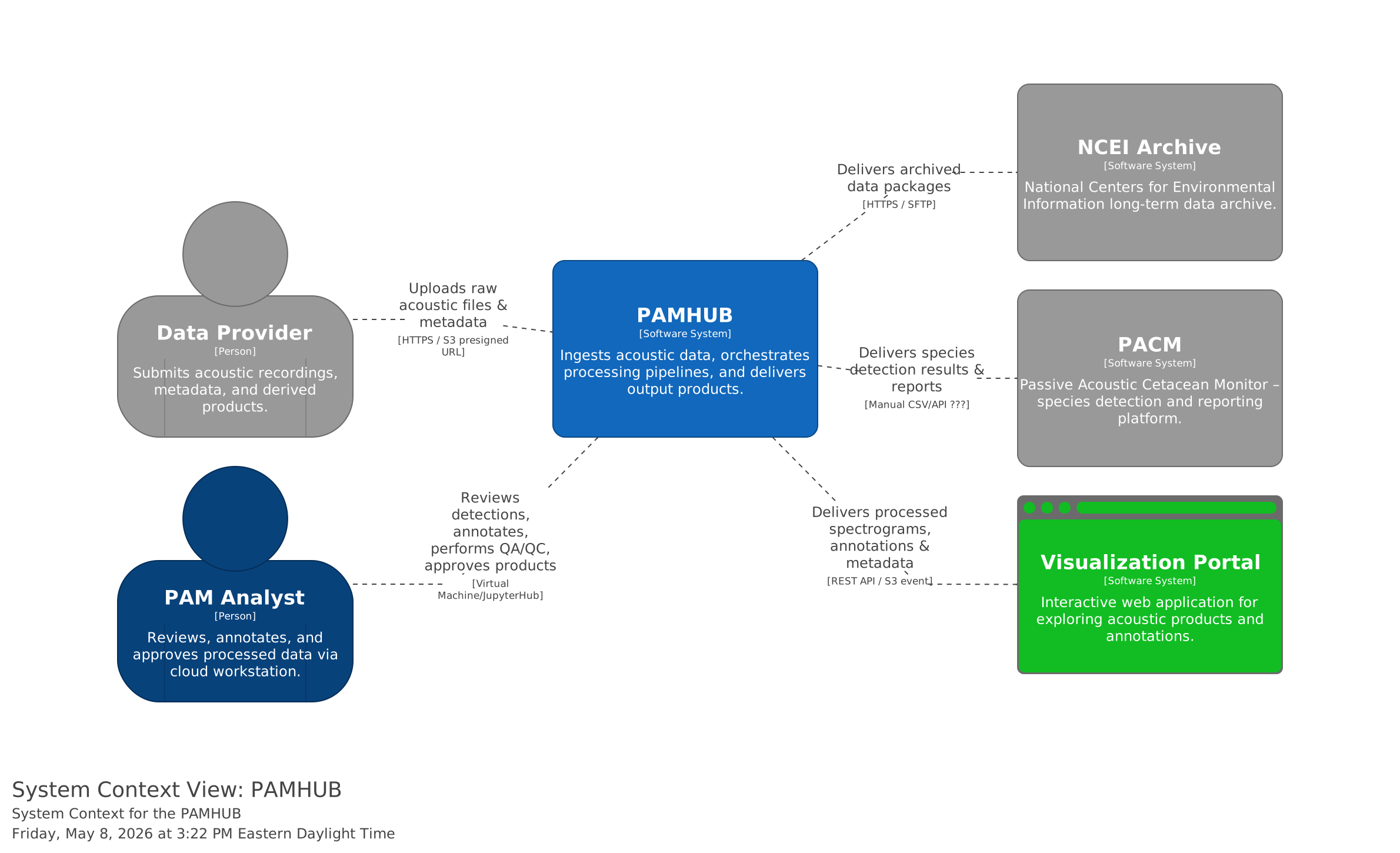
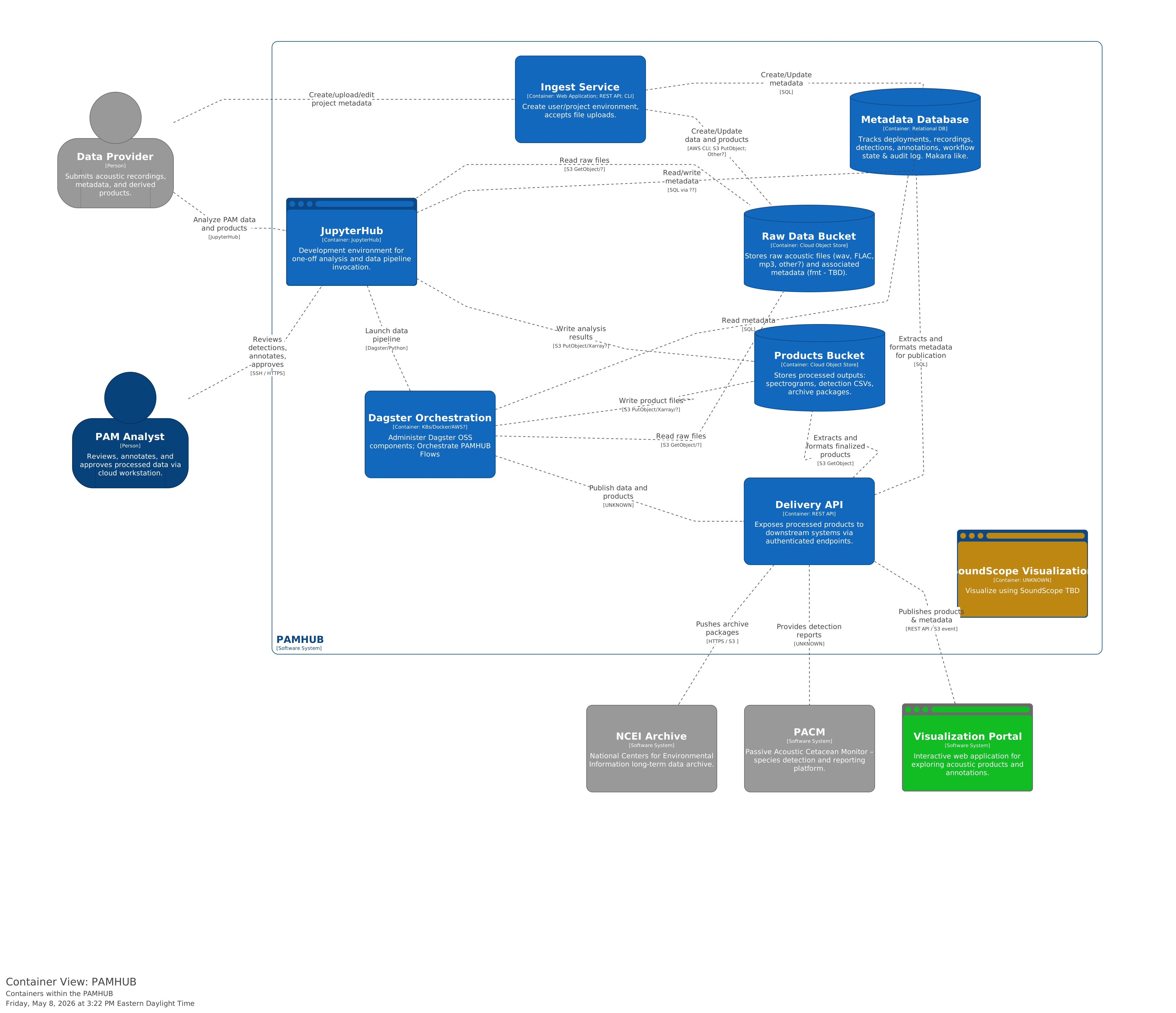
Decompose PAMHUB into High level functions (Containers)
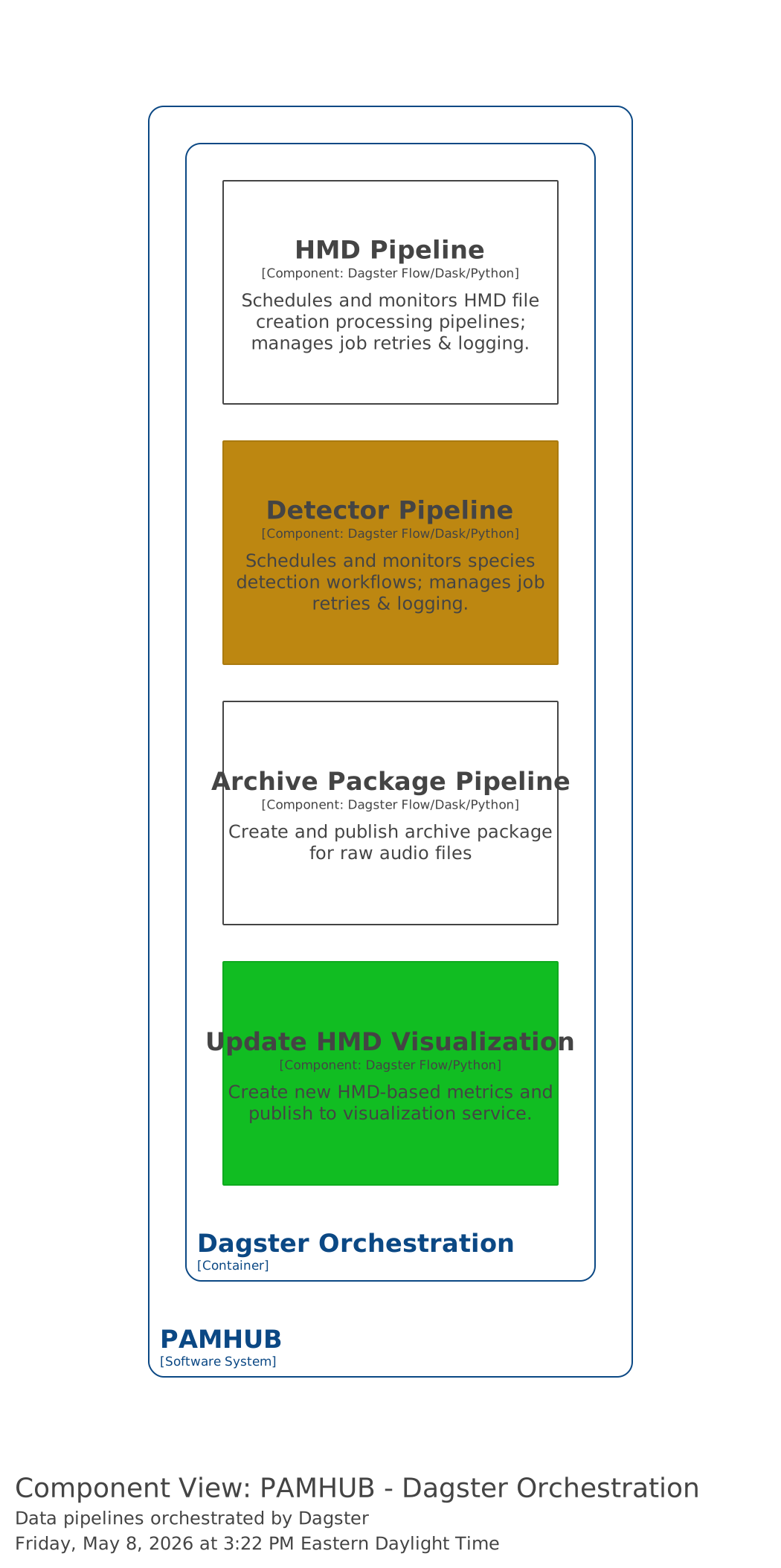
Dagster Components
Note
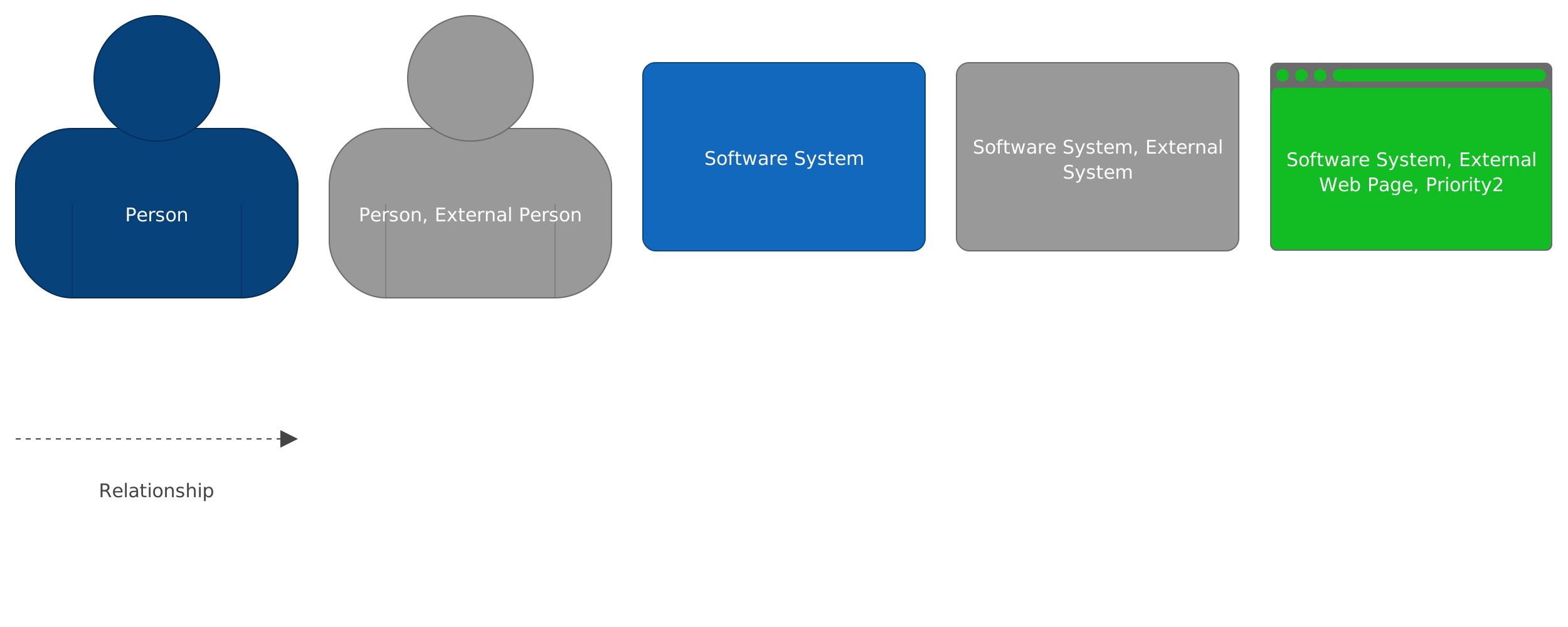
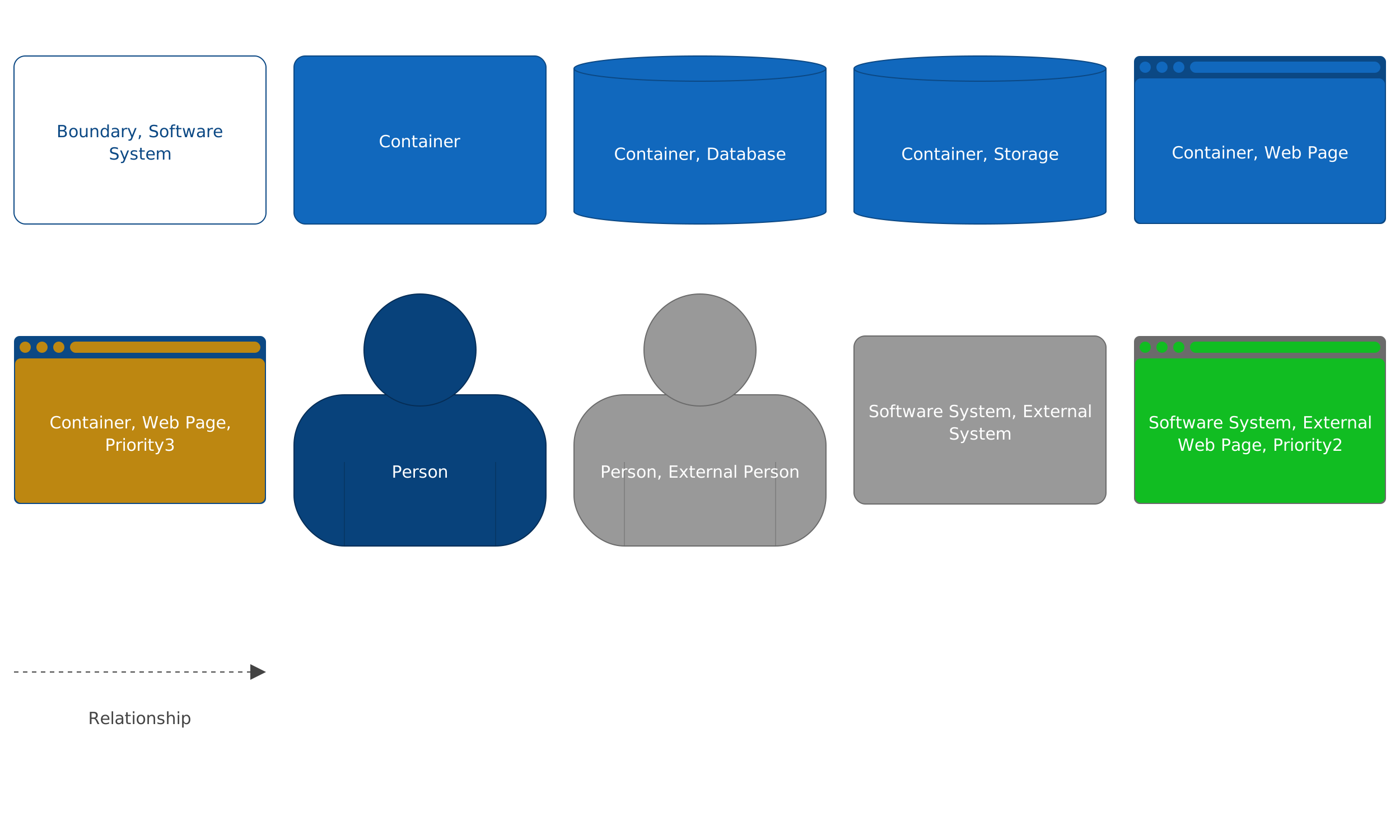
These diagrams follow the C4 software diagramming conventions. Importantly, in these diagrams "Containers" are generic objects that "contain" functionality provided by software packages. They are simply a level of abstraction that allows for showing different levels of detail in different diagrams. THEY ARE NOT DOCKER CONTAINERS!
Use Cases
Table of Use Cases
| Implementation Priority | UC ID | Use Case write up | Related Issues | UC Completion Status |
|---|---|---|---|---|
| 1 | uc-012 | Create project metadata | NA | Incomplete |
| 1 | uc-011 | QC check prior to data upload | NA | Incomplete |
| 1 | uc-005 | Upload raw audio | NA | Incomplete |
| 1 | uc-002 | Create HMD files w PyPAM | NA | Incomplete |
| 1 | uc-007 | Quality control raw audio | NA | Incomplete |
| 1 | uc-001 | Archive at NCEI | NA | Incomplete |
| 1 | uc-013 | QC HMD files | NA | Incomplete |
| 2 | uc-004 | Visualize climatology | NA | Incomplete |
| 3 | uc-003 | Apply species detectors | NA | Incomplete |
| 3 | uc-009 | Integrate internal SoundScope visualization | NA | Incomplete |
| 3 | uc-014 | Archive HMD files at NCEI | NA | Incomplete |
| 4 | uc-006 | Visualize other | NA | On hold |
| 4 | uc-008 | Publish detections to PACM and/or NCEI | NA | Incomplete |
| 4 | uc-010 | Provide analysis environment to external PIs/Data providers | NA | Incomplete |
Data flow diagrams or other dynamic diagrams describing the use cases PAMHUB will address.
Complete List of Detectors to be supported
See also Issue 4
General Tools: - PAMGuard detectors: (included with the PAMGuard install)
Multispecies Baleen Whales: - LFDCS
North Atlantic Minke whale pulse-train detector:
- CNN-based detector for detecting pulse trains from N-A minke whale. It is has been used along the US east coast from the Gulf of Maine , down to the Caribbeans and Mexico. It has mostly been used on fixed mooring, but a student from USVI used it successfully on glider data.
- The version most people use is on the repo here: https://github.com/xaviermouy/minke-whale-detector. The repo includes a word document with documentation/instructions.
- There is also a linux version to help batch processing on the NEFSC containers they run locally (i.e. not on their cloud environment). It is the same thing as above but with a few more sh scripts and wrapers to facilitate queuing processing tasks, etc. This was very specific for NEFSC's needs, so using the version above may be more appropriate. Repo here: https://github.com/xaviermouy/minke-whale-detector_batch-processing_linux
General fish detector:
A generic fish sound detector - GitHub repo here: https://github.com/xaviermouy/FishSound_Finder - Documentation and tutorial here: https://fishsound-finder.readthedocs.io/en/latest/
Kurtosis detector:
- This is a versatile impulse detector that is being used for detecting pile driving sounds (used by NOAA in the SNE wind energy areas for monitoring pile driving activity), haddock knock trains (what I use for monitoring haddock in the Gulf of Maine), and Megaptcliks from humpback whales (what I used in our herring investigation in Stellwagen bank).
- The configuration file used with the detector dictates what signals/frequencies to look for
- The GitHub repo is here and has a Word doc with instructions to run it: https://github.com/xaviermouy/KurtosisDetector
Humpback detector:
- This is the package from Vincent Kather called AcoDet: https://github.com/vskode/acodet
- NOAA NEFSC is now using this detector in addition to LFDCS for humpbacks